

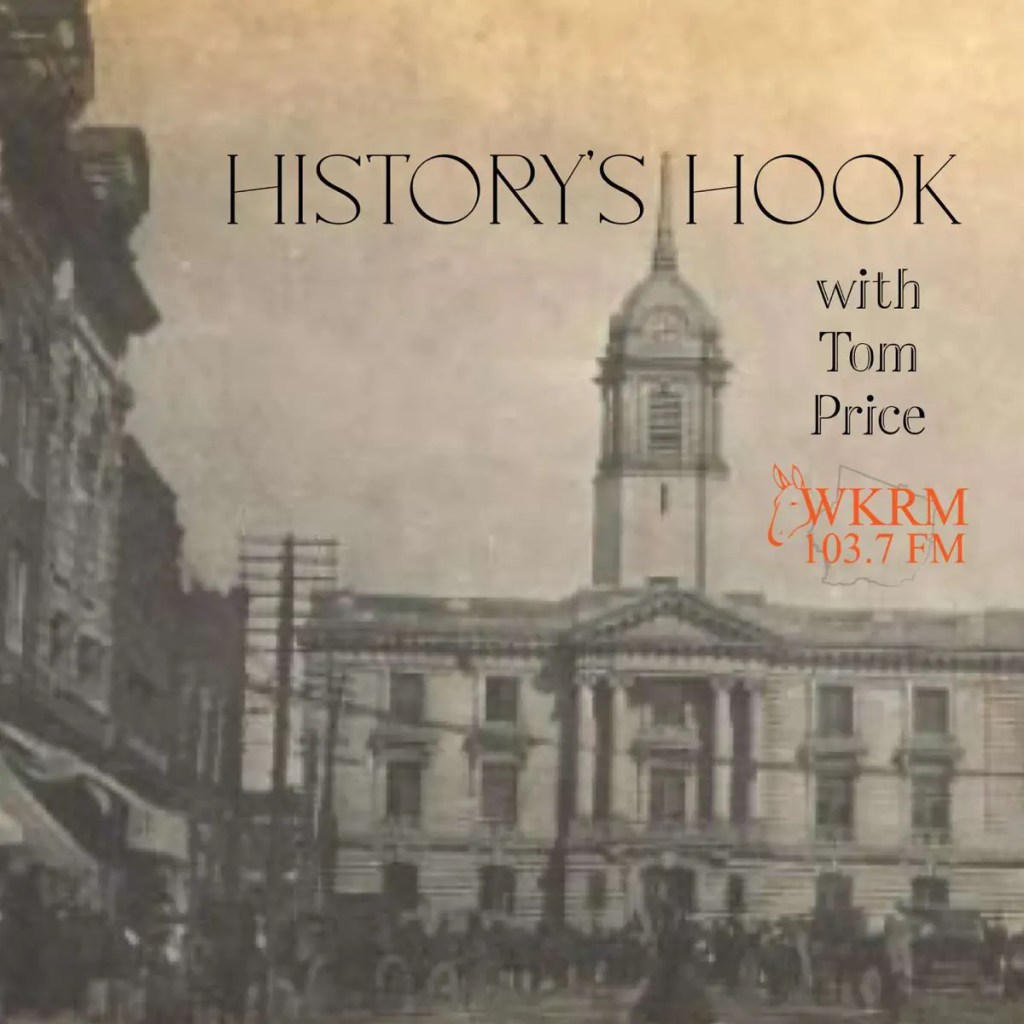
Plenty of people don’t have time to sit and read, and that’s okay. In our society, it is very easy to get carried away with a busy schedule with career and school. However, people have integrated a very relevant form of multimodal literature, that is: podcasts. When podcasts are mentioned, people may think of interviews with celebrities, or people with a platform discussing controversial topics. Regardless, there are much more to podcasts. Many people enjoy True Crime podcasts, and many other people enjoy learning through podcasts. If you don’t have time to sit and watch a documentary, you can listen to a podcast on your way to work, at the gym, or while you’re cleaning. One of the very successful informative podcasts is: History’s Hook which features historian Tom Price.
History’s Hook has served as an effective multimodal form of literature due to the topics of history that it visits. Not only does it have a section about important women in history, but it also dedicates episodes to elaborate topics like the role of race in sports. Personally, this podcast has helped me with my own research in my history class, last semester, on First Lady Eliza McCardle Johnson. By featuring history professors and additional historians, Tom Price is able to provide listeners with further information than the average history textbook, also by saving people the hassle.
On the topic of multimodal projects, texts, and literature, Kate Pantelides and Erica Stone debrief the definition by introducing readers to the modes of the idea. “Some scholars identify five different modes: Linguistic, Visual, Aural, Spatial, and Gestural.” (Pantelides, Stone) By acknowledging that the art of literature and information can be delivered in many different forms, opens up unlimited options on how to learn and gain information. Podcasts falling in the linguistic and technological side, especially History’s Hook, are also expected to come in a visual mode, as well. By offering different ways of conveying information, viewers and listeners can expect to engage effectively. In conclusion, with technology evolving and the pace of society moving faster, podcasts like History’s Hook serve as an outlet of information. By providing a (sometimes) visual, linguistic, and technological aspect, podcasts are able to impact their audience as a filler between the limited time towards leisure and continuing to learn and stay educated. In other words, podcasts can substitute and simplify time dedicated to reading, to listening or watching instead. Either way, people are not prevented from getting their education.
 Site Title
Leave a comment